
Gas feeds on a lab reactor are mostly a solved problem: a cylinder, a regulator, a thermal mass flow controller. Liquid feeds are where the real choices are. The pump or controller you pick decides how much bench space the unit eats, how high you can run pressure, how low you can run flow, how cleanly it ties into your control system, and how often someone ends up with the feed system in pieces on a cart.
Over the years I’ve fed liquids to reactors four different ways. I’ll go through them in the order I came to use them, because that order is really the story of what I learned to value:
- Teledyne ISCO syringe pumps
- Quizix pumps from Chandler Engineering
- Bronkhorst Coriolis liquid flow controllers
- A WADose pump driven by a Bronkhorst Coriolis meter in a feedback loop
None of these is the wrong answer. Each one is the right answer for some unit. The point of this article is to help you see which one fits yours before you’ve ordered it.
Teledyne ISCO syringe pumps
The first liquid feed system I ever used was an ISCO syringe pump, the D-Series from Teledyne ISCO. The D-Series has since been replaced by the SyriXus line, which Teledyne released in 2022 by folding the eighteen D-Series models into eight. From the equipment side it reads like a refresh of the line, not a different pump, so most of what follows should carry over.
I’ve used just about every configuration they offered: the very high pressure models, the high volume models, and setups with a second pump and valve package added so that one cylinder refills while the other delivers. That last arrangement turns a batch device into a continuous one, which matters as soon as your runs outlast a single cylinder.
What they do well. They are incredibly durable. We very rarely had to repair one. You can feel it when you lift one: they are heavy, solid pieces of equipment, and they do not break easily. They were also very consistent on flow. Set a rate and it holds it.
Where they fall short. They are bulky. You are not squeezing an ISCO into a tight spot on a skid or tucking it under a hood. Plan the footprint around it, not the other way around.
Quizix pumps
Quizix pumps are made by Chandler Engineering. Like any positive displacement pump they can build real pressure, so if you’re delivering liquid into a high pressure system, they do the job well.
Their standout feature is a built-in dual cylinder. One cylinder refills while the other delivers, so you get continuous flow out of the box instead of stopping to refill a single cylinder the way a stock ISCO does. In some processes that pause is a nonissue. In others, a flow interruption upsets the reactor, and that’s where the Quizix earns its place.
Where they fall short. Maintenance and connectivity. The Quizix was the hardest of these four to work on. The way it was built made repairs more involved than on any of the others. Getting it talking cleanly to our control system was also more work than it should have been. Between those two, I didn’t reach for it often.
Coriolis liquid flow controllers
Next I moved to Bronkhorst Coriolis flow controllers, the CORI-FLOW line. They work really well. They handle low flows well, they are far more compact than a large syringe pump, and they integrate into a control system much more easily. On a skid where space and controls integration matter, that combination is hard to beat.
There are two things you have to design around.
Vibration. A Coriolis sensor measures flow by watching a vibrating tube, so outside vibration gets into the measurement. Mount it where it isn’t picking up vibration from pumps, fans, or a shaking frame. Bronkhorst ships rubber feet with the unit to help dampen it. Use them.
Pressure comes from upstream. This is the bigger one. An ISCO drives a piston and physically forces liquid out, so it makes its own pressure. A Coriolis controller only meters and throttles. To deliver liquid into a pressurized reactor, the controller’s inlet has to sit above the reactor pressure, which means putting head pressure on the reservoir you’re feeding from.
Pressurizing the reservoir creates its own problems:
- Dissolved gas. If you pad the feed can with a helium or nitrogen blanket, at high enough pressure that gas dissolves into your liquid. Downstream, as the pressure drops, it can come back out as bubbles, and bubbles in a Coriolis tube are bad for the measurement.
- Bladder compatibility. The usual fix is a feed can with a bladder that keeps the blanket gas off the liquid. It’s not as simple as buying one. If your feed isn’t compatible with the bladder material, it will attack the bladder and dissolve it over time. Check compatibility against your actual feed before you order.
A pump driven by a Coriolis meter
The setup I ended up liking best combines a WADose high pressure pump with a Bronkhorst Coriolis flow meter. Bronkhorst sells this pairing: the meter sits inline after the pump, and its flow reading steers the pump speed in a closed loop.
That split of duties is what makes it work:
- The pump makes the pressure. You can pull from an unpressurized reservoir. No head pressure on the feed can, no blanket gas forced into solution, no bladder to worry about.
- The Coriolis meter sets the flow. You aren’t relying on the pump’s own flow accuracy. The meter measures true mass flow and trims the pump to hold setpoint, and the result is a really stable flow.
You get the pressure capability of a pump and the low flow measurement, compact footprint, and controls integration of a Coriolis device. It balances the best of both worlds about as well as anything I’ve used. The vibration advice from the last section still applies to the meter.
Side by side, including maintenance
On maintenance alone, the ISCO wins easily and the Quizix comes last. The table is sorted from least to most maintenance in my experience.
| System | Where the pressure comes from | Continuous flow | Footprint | Maintenance |
|---|---|---|---|---|
ISCO syringe pump 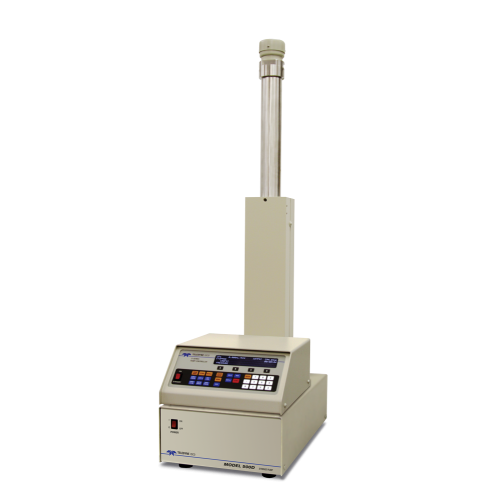 | Piston drive | Needs a second pump and valve package | Large and heavy | Lowest. We barely had to touch them |
Coriolis flow controller 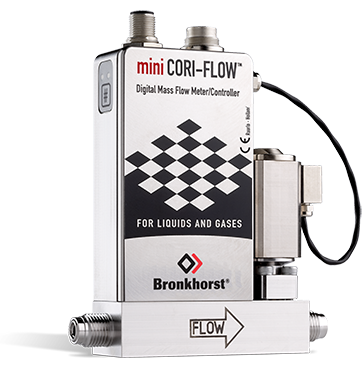 | Pressurized feed reservoir | Yes | Compact | Minimal. Few issues needing repair |
WADose pump + Coriolis meter 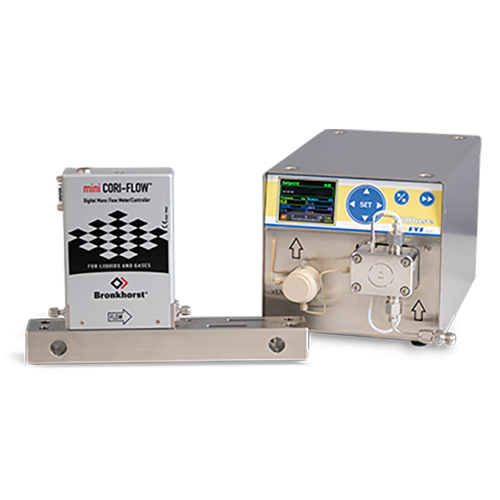 | Pump | Yes | Compact | Occasional fix to the pump head, and the pump is built to make that easy |
Quizix pump 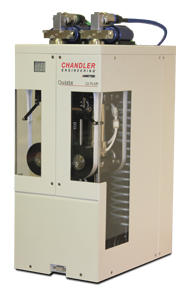 | Pump, dual cylinder | Built in | Benchtop pump | Hardest to repair of the four |
The WADose head repairs came up in a couple of circumstances, and they weren’t hard. The Quizix was a different story: its construction made a repair a real job.
Vendor specs by model
Here is what the manufacturers publish for the current models of each option. Treat it as a starting point for sizing, not a substitute for testing at your own rate and pressure.
| System | Model | Flow range (mL/min) | Max pressure (psi) | Accuracy | Continuous flow | Wetted materials |
|---|---|---|---|---|---|---|
| ISCO SyriXus syringe | 65x | 0.00001–25 | 20,000 | ±0.3% of setpoint | Two pumps + valve kit (0.00001–16) | Nitronic 50, Hastelloy, PTFE |
| ISCO SyriXus syringe | 260x | 0.001–107 | 9,500 | ±0.5% of setpoint | Two pumps + valve kit (0.001–70) | Nitronic 50, Hastelloy, PTFE, graphite, TFE |
| ISCO SyriXus syringe | 500x | 0.001–204 | 5,000 | ±0.5% of setpoint | Two pumps + valve kit (0.001–132) | Nitronic 50, Hastelloy, PTFE |
| ISCO SyriXus syringe | 1000x | 0.001–408 | 2,000 | ±0.5% of setpoint | Two pumps + valve kit (0.01–265) | Nitronic 50, Hastelloy, PTFE |
| Quizix QX dual piston | QX-500 | 0.1–500 | 500 | ±0.1% of set rate | Yes, single unit | 316 SS; Hastelloy C-276 optional |
| Quizix QX dual piston | QX-1500 | 0.05–200 | 1,500 | ±0.1% of set rate | Yes, single unit | 316 SS; Hastelloy C-276 optional |
| Quizix QX dual piston | QX-3000 | 0.025–100 | 3,000 | ±0.1% of set rate | Yes, single unit | 316 SS; Hastelloy C-276 optional |
| Quizix QX dual piston | QX-6000 | 0.001–50 | 6,000 | ±0.1% of set rate | Yes, single unit | 316 SS; Hastelloy C-276 optional |
| Quizix QX dual piston | QX-10K | 0.0005–30 | 10,000 | ±0.1% of set rate | Yes, single unit | 316 SS; Hastelloy C-276 optional |
| Quizix QX dual piston | QX-20K | 0.0001–7.5 | 20,000 | ±0.1% of set rate | Yes, single unit | 316 SS; Hastelloy C-276 optional |
| Bronkhorst Coriolis controller | mini CORI-FLOW M12V14I | Up to 3.3 (0–200 g/h) | 1,450 | ±0.2% of reading + zero stability | Yes, from a pressurized feed | 316L SS |
| Bronkhorst Coriolis controller | mini CORI-FLOW M13V14I | Up to 33 (0–2,000 g/h) | 1,450 | ±0.2% of reading + zero stability | Yes, from a pressurized feed | 316L SS |
| Bronkhorst Coriolis controller | mini CORI-FLOW M15 + valve | 3.3–5,000 (0.2–300 kg/h) | 1,450 | ±0.2% of reading + zero stability | Yes, from a pressurized feed | 316L SS |
| WADose + Bronkhorst Coriolis meter | WADose LITE HP, head 2 | 0.001–2 | 5,800 | ±0.2% of reading (Coriolis loop) | Yes, dual piston | SS, PEEK, or Hastelloy C head |
| WADose + Bronkhorst Coriolis meter | WADose LITE HP, head 10 | 0.005–10 | 5,800 | ±0.2% of reading (Coriolis loop) | Yes, dual piston | SS, PEEK, or Hastelloy C head |
| WADose + Bronkhorst Coriolis meter | WADose LITE HP, head 40 | 0.02–40 | 2,320 | ±0.2% of reading (Coriolis loop) | Yes, dual piston | SS, PEEK, or Hastelloy C head |
| WADose + Bronkhorst Coriolis meter | WADose LITE HF 150 | 0.075–150 | 5,800 | ±0.2% of reading (Coriolis loop) | Yes, dual piston | SS, PEEK, ruby, sapphire, FFKM |
| WADose + Bronkhorst Coriolis meter | WADose LITE HF 250 | 0.125–250 | 3,190 | ±0.2% of reading (Coriolis loop) | Yes, dual piston | SS, PEEK, ruby, sapphire, FFKM |
| WADose + Bronkhorst Coriolis meter | WADose LITE HF 500 | 0.25–500 | 2,320 | ±0.2% of reading (Coriolis loop) | Yes, dual piston | SS, PEEK, ruby, sapphire, FFKM |
A few things the table hides. The accuracy figures measure different things: ISCO and Quizix quote volumetric displacement, while Bronkhorst quotes mass as a percent of reading plus a zero-stability term that dominates at the low end of a range. ISCO maximum flow drops as operating pressure rises. Coriolis flows are converted from g/h assuming water, so scale by your feed’s density.
Where I landed
I started out on ISCO pumps and used them for most of my early work. I used the Quizix at times, but not often, because of the maintenance and connectivity trouble. I moved to Bronkhorst Coriolis controllers for the smaller footprint and how easily they tied into the control system. On my reactors I ultimately settled on the WADose pump with a Bronkhorst Coriolis meter, because it gave me the footprint, the ability to work at pressure, the flow range, and the stability all in one package.
If you’re choosing for a new unit, these are the questions that sorted it out for me:
- Do you need pressure, and can you pressurize the feed? If you can’t or shouldn’t pad the reservoir, rule out a Coriolis controller on its own.
- How tight is the space? If it’s tight, the ISCO is out.
- Can the flow pause to refill? If not, you need the dual-cylinder Quizix, a dual-pump ISCO setup, or a pump-plus-Coriolis loop.
- Who maintains it, and how often can it be down? The ISCO is the one you can forget about. The Quizix is the one you can’t.
Sources
- Teledyne ISCO release new line of syringe pumps, SelectScience, Jan 2022
- Pumps for combination with flow meters, Bronkhorst